
Dentures in Mount Pleasant, SC: A Guide to Comfortable Tooth Replacement
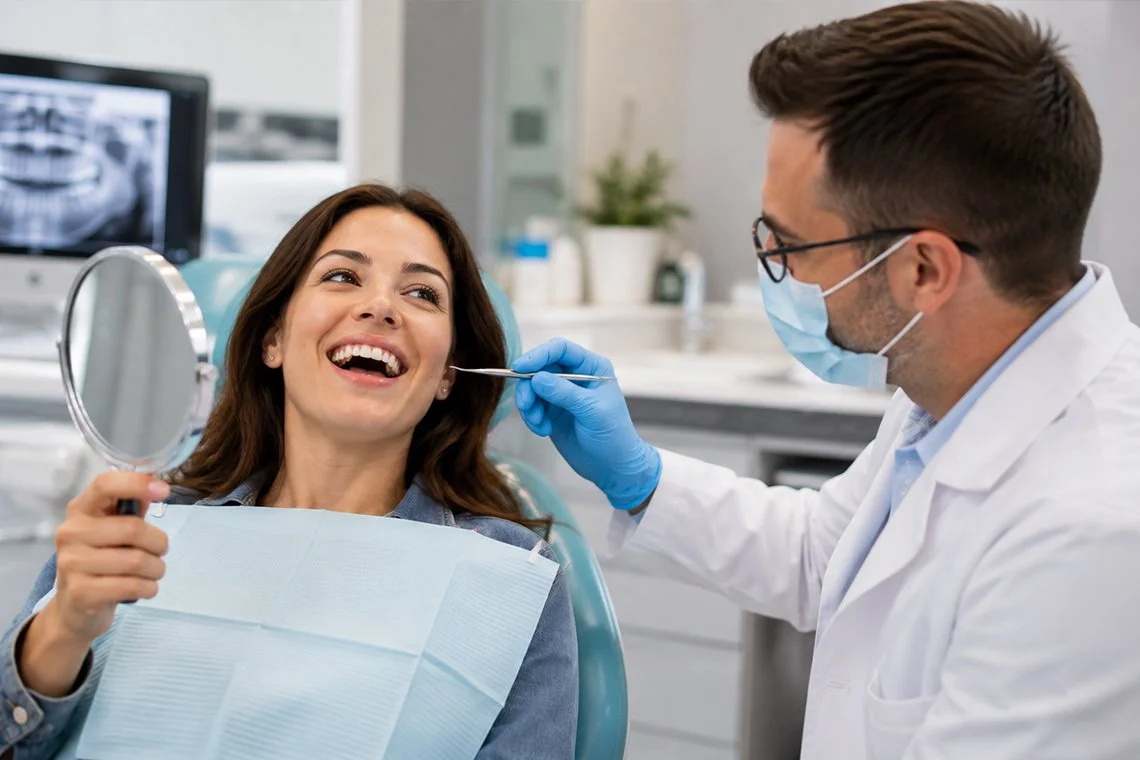
Missing teeth can make everyday moments—sharing a meal, speaking clearly, or smiling for a photo—feel more difficult than they should. Fortunately, today’s tooth-replacement options are more personalized and natural-looking than many people expect.
For patients researching dentures in Mount Pleasant, SC, understanding the available choices is an important first step. Traditional removable dentures remain a practical solution, while dental implants can provide additional stability for eligible patients. The best approach depends on how many teeth are missing, the condition of the gums and jawbone, general health, personal preferences, and budget.
This article offers general educational information and is not a diagnosis or personalized treatment recommendation. A dentist or dental specialist should evaluate concerns about missing teeth, denture fit, gum health, or implant candidacy.
What Are Dentures?
Dentures are custom-made prosthetic teeth designed to replace several missing teeth or an entire dental arch. They generally include artificial teeth attached to a base that resembles natural gum tissue.
A well-planned denture is intended to restore appearance and support everyday functions such as speaking and chewing. Fit and retention are especially important because a denture that moves can affect comfort and confidence. Dental researchers commonly evaluate both retention and oral-health-related quality of life when studying complete dentures, as reflected in a recent randomized clinical trial.
Because every mouth is different, dentures must be designed around an individual patient’s anatomy rather than selected as a one-size-fits-all product.
Types of Dentures Available to Patients
Complete Dentures
Complete, or full, dentures replace all teeth in the upper jaw, lower jaw, or both. Traditional complete dentures rest on the gums and rely on their shape, close adaptation to the oral tissues, and natural suction or muscle control for support.
Upper dentures often cover part of the palate. Lower dentures have a horseshoe shape that leaves room for the tongue. Because the lower jaw offers less surface area for support, some patients notice more movement in a lower denture.
Partial Dentures
A partial denture may be appropriate when healthy natural teeth remain. It fills the spaces left by missing teeth and typically uses clasps or other attachments for support.
Replacing these spaces may make chewing easier and prevent the smile from appearing incomplete. The remaining teeth and gums must be evaluated carefully because they help support the restoration.
Immediate Dentures
Immediate dentures are placed soon after selected teeth are removed, allowing a patient to avoid going without teeth during early healing. However, the mouth changes as extraction areas heal. As a result, an immediate denture may need adjustments, relining, or eventual replacement.
Patients considering this option should ask which services are included in the treatment plan and how follow-up adjustments will be handled.
Implant-Retained Removable Dentures
An implant-retained denture connects to dental implants placed in the jaw. The patient can remove the denture for cleaning, but the attachments can help it feel more secure during speaking and eating.
This option may be especially appealing to someone who struggles with movement in a traditional lower denture. Implant treatment is not appropriate for everyone, so the gums, available bone, medical history, medications, and ability to maintain the restoration all require careful review.
Fixed Full-Arch Implant Restorations
A fixed full-arch restoration is supported by multiple implants and remains in the mouth rather than being removed at home. Although people sometimes call it a “permanent denture,” it is more accurately described as an implant-supported fixed bridge or full-arch restoration.
Charleston Endo Perio provides information about All-on-4 dental implants in Mount Pleasant for patients exploring a stable, full-arch alternative. Candidacy and the number of implants needed can only be determined after an examination and appropriate imaging.
Traditional Dentures vs. Implant-Supported Options
Neither choice is automatically right for every patient. Traditional dentures do not require implant surgery and may have a lower initial cost. They can be a sensible option for patients who prefer removable treatment or are not candidates for implants.
Implant-supported options may offer greater retention, but they involve additional planning, a surgical procedure, healing, and ongoing professional maintenance. They may also cost more because treatment can include imaging, surgery, implant components, temporary teeth, and the final restoration.
Implants do not eliminate the need for follow-up care. A retrospective clinical study of implant-supported restorations reported complications such as loss of retention, inflammation around implants, screw loosening, and restoration fracture. These findings do not mean complications will occur, but they reinforce the importance of maintenance and prompt evaluation when something feels different. The study can be reviewed through the National Library of Medicine.
What Happens During the Denture Process?
The process begins with an oral examination and a conversation about the patient’s priorities. The dental team may evaluate the remaining teeth, gums, bite, jaw relationships, and existing restorations. Imaging may be recommended when extractions, bone conditions, or dental implants are part of the discussion.
For a conventional denture, the process generally includes records or impressions of the mouth, bite measurements, selection of tooth shape and shade, and one or more fitting appointments. Adjustments are often part of the process because even a carefully made denture may create pressure spots as the patient begins using it.
If implants are involved, treatment includes several distinct phases:
Early symptom recovery: Initial soreness, swelling, or tenderness after surgery is different from complete healing. The patient should follow the surgical team’s instructions and report symptoms that are severe, worsening, or unexpected.
Soft-tissue healing: The gum tissue continues to close and mature after the early discomfort begins improving.
Osseointegration: The bone must form a stable connection with the implant. This biological process is separate from surface gum healing and may continue after the area feels comfortable.
Final restoration: The definitive teeth are completed only when the clinical team determines that the implants and surrounding tissues are ready and the restorative plan can proceed.
The total treatment sequence varies. Bone condition, extractions, gum health, the type of restoration, healing response, and coordination between providers can all affect the plan.
Getting Used to New Dentures
A new denture can feel unfamiliar at first. The cheeks and tongue need time to adapt, and speech may sound slightly different. Reading aloud at home can help a patient practice difficult words in a low-pressure setting.
It is often easier to begin with soft foods cut into small pieces. Chewing slowly and using both sides of the mouth can help balance the denture. Sticky, very hard, or difficult-to-chew foods may be challenging during the adjustment period.
A new denture should not be endured if it creates persistent pain. Small areas of excess pressure can become sore, and a professional adjustment may provide relief. Patients should avoid filing, bending, or repairing a denture at home because these changes can damage it and make an accurate professional adjustment more difficult.
How to Care for Dentures and Oral Tissues
Daily hygiene remains essential even when no natural teeth are present. Plaque and food debris can collect on dentures and oral tissues, contributing to odor, irritation, or inflammation.
Clean removable dentures every day with a denture brush and a product recommended by the dental team.
Handle dentures over a folded towel or basin of water to reduce the chance of breakage if they are dropped.
Clean the tongue, gums, palate, and any remaining teeth gently.
Remove dentures as directed to give the supporting tissues a rest.
Keep removable dentures from drying out, following the manufacturer’s and dentist’s storage instructions.
Attend routine examinations so the fit, tissues, remaining teeth, and oral health can be checked.
Implant-supported restorations need their own cleaning routine. Special brushes, floss threaders, or oral irrigating devices may be recommended depending on the design. Professional maintenance helps the clinical team monitor the gums, implant components, bite, and restoration.
When Should a Denture Be Checked?
The shape of the mouth can change over time, so a denture that once felt comfortable may eventually loosen. An evaluation is appropriate when a denture begins slipping, clicking, rubbing, or making chewing more difficult.
Patients should also arrange an examination for:
Persistent sore areas, redness, or swelling
Cracks, worn teeth, or broken denture components
A change in the bite
Difficulty keeping an implant-supported denture attached
Bleeding or tenderness around an implant
Any oral sore or unusual tissue change that does not improve
Denture adhesive may improve confidence in certain situations, but it should not be used to hide an ongoing fit problem. A loose or painful appliance deserves a professional assessment.
What Affects the Cost of Dentures in Mount Pleasant, SC?
The cost of dentures varies because “denture treatment” can describe several very different services. Factors may include whether the appliance is partial or complete, the materials used, the need for extractions, the number of appointments, temporary restorations, laboratory work, and follow-up adjustments.
Implant-supported treatment involves additional variables, including diagnostic imaging, bone or gum procedures when clinically necessary, the number and type of implants, attachment components, sedation when appropriate, and whether the final restoration is removable or fixed.
A written treatment plan is the most useful way to compare choices. Patients can ask what is included, which services may be billed separately, whether insurance benefits apply, and whether financing is available. Cost should be considered alongside comfort, maintenance needs, treatment time, and long-term goals.
Why Gum and Bone Health Matter
Dentures depend on healthy supporting tissues. Sore or inflamed gums can make a removable appliance uncomfortable, while active periodontal problems require attention before or alongside restorative treatment.
For implant candidates, the specialist evaluates both the bone and the gum tissue around the proposed implant sites. Charleston Endo Perio combines periodontic services with dental implant care, allowing patients to discuss the foundation that may support an implant-retained denture or fixed full-arch restoration.
Frequently Asked Questions
Will dentures look natural?
Modern dentures can be customized for tooth shade, shape, size, and arrangement. Natural-looking results depend on thoughtful planning and how the teeth relate to the face, lips, gums, and bite. Patients should share their preferences during the design process.
Can a person eat normally with dentures?
Many patients regain useful chewing function, although removable dentures do not feel exactly like natural teeth. Starting with manageable foods and practicing balanced chewing can make adaptation easier. Persistent difficulty should be evaluated rather than accepted as unavoidable.
Does everyone need denture adhesive?
No. Some patients use a small amount for added confidence, while others do not need it. Frequent reliance on large amounts may indicate that the fit should be checked.
Can existing dentures be converted to implant dentures?
Sometimes, but not every denture has the strength, fit, space, or design needed for conversion. The dentist or specialist must inspect the appliance and evaluate the planned implant positions before recommending reuse.
Are dental implants an option after years of wearing dentures?
They may be. Long-term denture use does not automatically rule out implants, but available bone, gum health, medical history, medications, and other factors must be assessed. Three-dimensional imaging may be part of that evaluation.
Who should evaluate implant-supported dentures?
Care often involves coordination between the dentist who designs or restores the teeth and a clinician with implant-surgery expertise. Patients should ask who will place the implants, who will make the final restoration, and how maintenance or urgent concerns will be managed.
Explore Tooth-Replacement Options in Mount Pleasant
Choosing among traditional dentures, implant-retained dentures, and fixed full-arch teeth is a personal decision. A careful examination can clarify what is realistic and help a patient compare comfort, stability, maintenance, treatment steps, and cost without pressure.
Patients in Mount Pleasant, SC, who want to learn whether dental implants could support a removable denture or fixed full-arch restoration can contact Charleston Endo Perio. The specialty team can evaluate gum and bone health, answer questions, and coordinate an individualized plan with the patient’s restorative dentist when appropriate.
