
A bright, balanced smile can make a meaningful difference in how someone feels when speaking, laughing, or posing for a photo. For people researching veneers in Mount Pleasant, SC, however, appearance is only one part of the decision. It is just as important to understand how veneers work, what they can and cannot correct, and whether the teeth and gums are healthy enough for cosmetic treatment.
Veneers can provide natural-looking improvements when they are carefully planned and placed by a licensed dentist. They are not the best choice for every patient, and they should never be used to hide untreated decay, gum disease, or an infection inside a tooth. A thorough examination helps protect both the appearance of the new smile and the health beneath it.
This article provides general education and is not a diagnosis or treatment recommendation. A licensed dentist should examine your teeth, gums, bite, and dental history before recommending veneers or another cosmetic option.
What Are Dental Veneers?
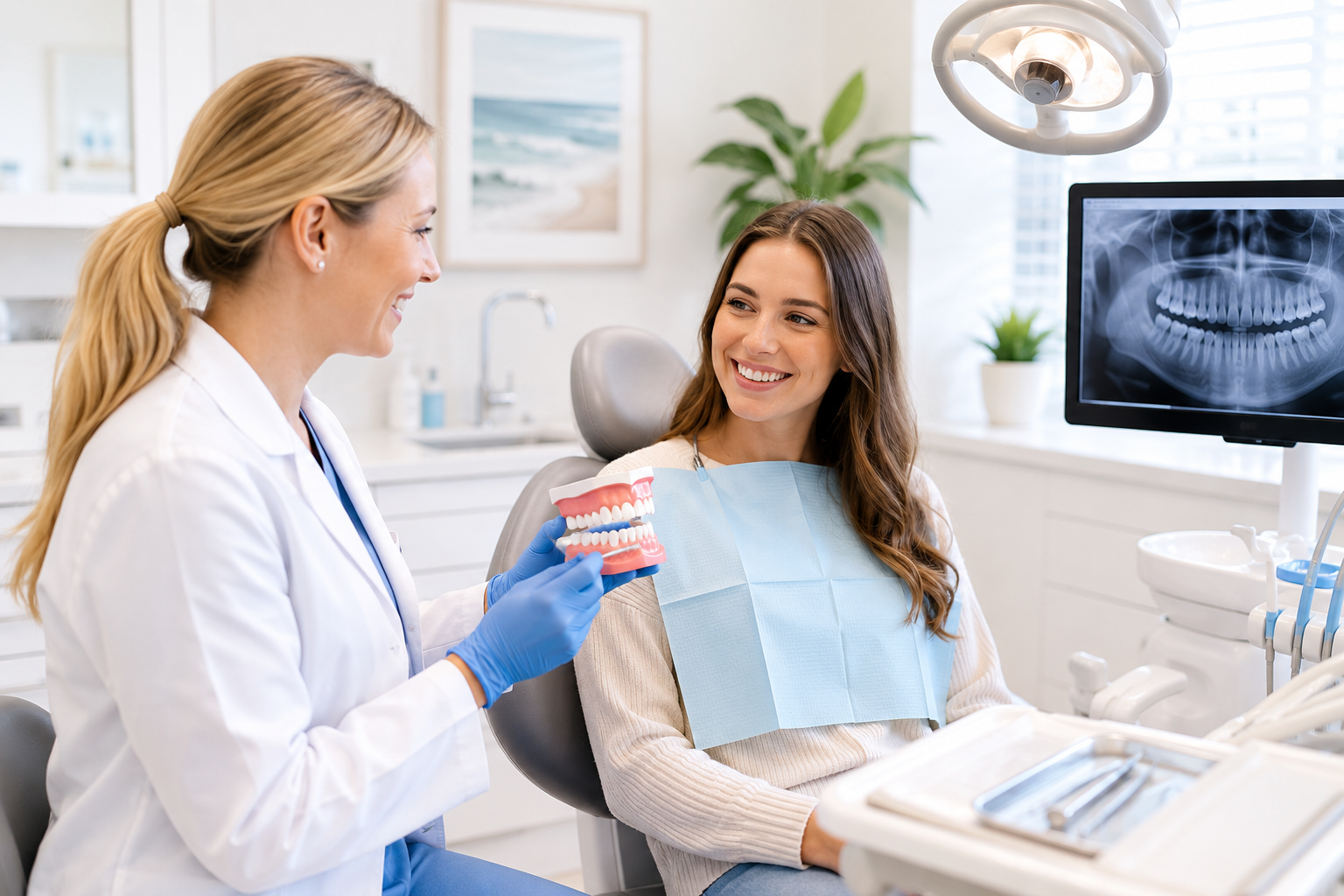
Dental veneers are thin coverings placed over the front surfaces of teeth. Each veneer is shaped and shaded to improve the appearance of the tooth while blending with the surrounding smile.
Veneers are commonly considered for cosmetic concerns such as:
- Stains or discoloration that do not respond well to whitening
- Small chips or worn edges
- Minor gaps between teeth
- Teeth that look uneven, short, or irregularly shaped
- Subtle alignment concerns that do not necessarily require orthodontic movement
A veneer changes the visible surface of a tooth; it does not replace the entire tooth. A crown, by comparison, covers much more of the tooth and may be recommended when additional structural support is needed. Dental bonding, whitening, orthodontics, or a combination of treatments may sometimes achieve a patient's goals with less alteration to the natural tooth.
Porcelain and Composite Veneers
Porcelain veneers are custom restorations generally created by a dental laboratory. Porcelain can closely reproduce the translucency and color variation of natural enamel. Placement usually requires more than one appointment because the restorations must be designed, fabricated, evaluated, and bonded into place.
Composite veneers use tooth-colored resin that a dentist shapes directly on the teeth. They may require fewer visits and can be more conservative in selected cases. However, composite material and porcelain differ in strength, stain resistance, repairability, appearance, and cost.
Neither material is automatically best for everyone. The right option depends on the condition of the teeth, the number of teeth involved, the desired result, bite forces, daily habits, and budget.
Who May Be a Good Candidate for Veneers?
A promising candidate typically has healthy teeth and gums, realistic expectations, and enough sound tooth structure to support the restorations. The patient must also be willing to maintain consistent brushing, interdental cleaning, and professional dental care.
Before recommending veneers, a dentist may assess:
- The presence of cavities, cracks, or weakened fillings
- Gum inflammation, recession, or periodontal disease
- The amount and condition of the tooth enamel
- How the upper and lower teeth come together
- Clenching, grinding, nail biting, or chewing on hard objects
- Previous root canal treatment or unexplained tooth discoloration
- The patient's cosmetic priorities and expectations
Patients with active oral health problems may still be able to pursue cosmetic care later. The safer sequence is usually to diagnose and stabilize those conditions first, then revisit the veneer plan.
Why Gum Health Matters
Healthy gums help create the frame around a new smile. Swollen, bleeding, or receding gums can affect the appearance of veneers and may make it difficult to create stable, natural-looking margins.
Gum disease should be addressed before elective cosmetic treatment. Depending on the condition, a general dentist may coordinate care with a periodontist, a specialist focused on the gums and supporting structures around the teeth. In some cosmetic cases, periodontal treatment may also be considered to improve gum symmetry or expose more tooth structure. Recommendations vary and require an individual examination.
Why the Health Inside a Tooth Matters
Ongoing tooth pain, sensitivity when biting, swelling, or a tooth that has become noticeably darker can point to an underlying problem. These signs do not automatically mean that root canal treatment is necessary, but they should be evaluated before a veneer is placed.
An endodontist specializes in diagnosing and treating problems involving the dental pulp and tissues around the tooth root. A previously treated tooth may also need a different cosmetic approach. For example, internal bleaching may sometimes be considered for discoloration that originates inside a root canal-treated tooth, while ordinary external whitening may not change that internal color.
What to Expect During the Veneer Process
The details differ by patient, material, and dental office, but veneer treatment generally follows several planning and placement stages.
1. Consultation and Examination
The dentist listens to the patient's goals and evaluates the teeth, gums, bite, and existing dental work. Photographs, digital scans, impressions, or dental X-rays may be used when clinically appropriate. This is also the time to discuss alternatives, limitations, expected maintenance, and fees.
2. Smile Planning
The color, size, shape, and position of each proposed veneer must work with the patient's facial features and neighboring teeth. Some practices use digital previews or trial designs to help patients understand the proposed changes. A preview is a planning tool rather than a promise of an identical final result.
3. Tooth Preparation
Some veneer designs require the dentist to remove a small amount of enamel so the restoration does not look bulky. Other cases may involve minimal preparation, but “no-prep” treatment is not suitable for every tooth or smile.
Because enamel does not grow back, patients should understand whether their plan is reversible before agreeing to treatment. The American Dental Association's patient guidance on veneers recommends discussing dental history, expectations, and concerns with a licensed dentist.
4. Temporary and Final Veneers
When porcelain restorations are made by a laboratory, temporary veneers may be used while the final set is being created. Temporary restorations can help protect prepared teeth, but they may feel different from the final veneers.
At the placement visit, the dentist checks the fit, shape, color, and bite before bonding the veneers. Adjustments may be made to improve comfort and function. Follow-up visits allow the dental team to examine the gums, bite, and overall result.
Are Veneers Painful?
Patient experiences vary. Local anesthetic may be used during tooth preparation to help maintain comfort. Temporary sensitivity to temperature or pressure can occur after treatment, particularly when enamel has been altered.
Persistent pain, worsening sensitivity, swelling, or a bite that feels noticeably uneven should not be ignored. A dentist can determine whether the concern involves the veneer, the bite, the gums, or the tooth itself. Prompt evaluation is especially important when discomfort interferes with eating or sleep.
How to Care for Veneers
Veneers do not make teeth immune to oral disease. Cavities can still develop around or beneath a restoration, and gum inflammation can affect the tissue at its edge.
To care for veneers and the teeth supporting them:
- Brush twice daily with fluoride toothpaste and a soft-bristled toothbrush.
- Clean between the teeth every day using floss or another recommended interdental cleaner.
- Keep routine dental examinations and professional cleaning appointments.
- Avoid chewing ice, pens, fingernails, or other hard objects.
- Wear an athletic mouthguard during activities that could injure the mouth.
- Ask about a protective nightguard if clenching or grinding is a concern.
- Contact a dentist if a veneer chips, loosens, or begins to feel different.
Coffee, tea, red wine, tobacco, and other staining substances can affect the overall color of a smile. Natural teeth may change shade differently from restorative materials, so future whitening should be discussed with a dentist rather than started without guidance.
How Much Do Veneers Cost in Mount Pleasant, SC?
Veneer costs vary considerably, and an examination is generally required for a meaningful estimate. Factors may include the selected material, number of teeth, complexity of the design, laboratory work, preparatory treatment, temporary restorations, and follow-up care.
Dental insurance often treats veneers as elective cosmetic care, although individual benefits differ. Patients can ask for a written treatment plan explaining what is included, whether any health-related procedures are separate, and which financing or payment options may be available.
Price matters, but it should not be the only deciding factor. Proper diagnosis, conservative planning, the provider's training, quality materials, and long-term maintenance all contribute to responsible care. Veneers should only be placed by a licensed dental professional.
Choosing a Provider for Veneers in Mount Pleasant
A cosmetic consultation should feel informative rather than rushed. Patients may want to ask:
- Are veneers the most conservative way to reach the desired result?
- Does any decay, gum disease, infection, or bite problem need attention first?
- How much natural enamel would be altered?
- Which material is being recommended, and why?
- What result is realistic for this particular smile?
- What maintenance or future replacement should be anticipated?
- Who should be contacted if a veneer chips or discomfort develops?
Some patients benefit from coordinated care between a general or cosmetic dentist and a dental specialist. Located at 910 Johnnie Dodds Blvd, Suite 120, Mount Pleasant, SC 29464, Charleston Endo Perio provides endodontic, periodontal, and dental implant care. The specialty team can evaluate certain root, gum, or supporting-tissue concerns when those issues need attention before or alongside a broader restorative plan.
Frequently Asked Questions About Veneers
Do veneers look like natural teeth?
Well-planned veneers can closely resemble natural enamel in shape, color, and translucency. Results depend on the material, design, clinical situation, and skill involved. The goal is usually a smile that fits the patient's face rather than an identical appearance for every person.
Can veneers fix crooked teeth?
Veneers may visually improve minor irregularities, but they do not physically move teeth. Orthodontic treatment may be more appropriate when crowding, spacing, or bite problems are significant. A dentist can explain which approach preserves the most healthy tooth structure.
Can a tooth get a cavity under a veneer?
Yes. The veneer itself cannot decay, but the natural tooth around or beneath it can. Daily oral hygiene, fluoride toothpaste, a balanced diet, and regular dental care remain important.
Can veneers be whitened?
Traditional whitening products are designed to lighten natural tooth structure and generally do not change restorative materials in the same way. Patients considering whitening should discuss timing with a dentist so the planned veneer shade coordinates with the surrounding teeth.
Are veneers permanent?
Veneers may provide long-term service, but no dental restoration should be considered permanent or maintenance-free. They can chip, wear, loosen, stain at the edges, or eventually require repair or replacement. When enamel is removed during preparation, the tooth will continue to need an appropriate restoration.
What if a tooth hurts before cosmetic treatment?
Cosmetic treatment should usually pause until the cause of the discomfort is identified. Pain may have several causes, including decay, a crack, bite stress, gum inflammation, or irritation inside the tooth. An examination is necessary to determine the appropriate next step.
Start With a Healthy Foundation
Veneers can be a valuable cosmetic option for selected patients, but the best smile plans begin with healthy teeth, stable gums, and clear expectations. A comprehensive evaluation can help determine whether veneers, bonding, whitening, orthodontics, or another approach makes the most sense.
Patients in Mount Pleasant with questions about gum health, tooth-root concerns, a darkened root canal-treated tooth, or specialist coordination can contact Charleston Endo Perio to discuss an appropriate consultation. Asking questions before cosmetic treatment is not an extra step—it is part of building a comfortable, healthy, and confident smile.
